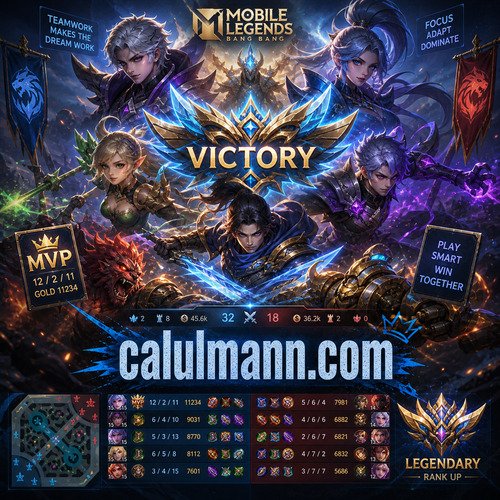
calulmann.com – Mobile Legends has evolved into one of the most competitive mobile games in the world, bringing together players from different countries, backgrounds, and skill levels. The game offers an exciting blend of action, strategy, teamwork, and decision-making that keeps every match fresh and unpredictable. Whether someone is playing casually with friends or aiming for the highest ranks, understanding the game’s mechanics and strategic elements is essential for long-term success.
At first glance, Mobile Legends may appear straightforward. Players select heroes, enter the battlefield, and attempt to destroy the enemy base. However, beneath this simple objective lies a complex system of resource management, objective control, hero matchups, rotations, and team coordination. The difference between an average player and an exceptional one often comes down to how effectively these systems are understood and applied.
Many players become stuck at certain ranks because they focus only on individual performance. They may secure numerous kills but fail to convert those advantages into meaningful objectives. Others possess strong mechanics but struggle with positioning and map awareness. True improvement requires a balanced approach that combines technical skill with strategic understanding.
Understanding Hero Roles and Their Responsibilities
A strong team composition creates the foundation for success before the match even begins. Each role exists for a specific reason, and understanding these responsibilities helps teams function more effectively.
A balanced lineup typically includes a durable frontline, reliable damage dealers, crowd-control specialists, and heroes capable of creating pressure around the map. When a team lacks one of these components, weaknesses often become apparent as the match progresses.
For example, a lineup without a tank may struggle to initiate fights safely. Similarly, a team lacking sustained damage can have difficulty eliminating objectives or winning extended engagements. Understanding these dynamics helps players make smarter hero selections during the drafting phase.
Team composition is not only about choosing strong heroes. It is also about ensuring that heroes complement one another. Certain combinations create powerful synergies that enhance overall effectiveness, while poorly coordinated selections can create significant disadvantages.
Excelling as a Tank Player
Tank players often receive less recognition than damage dealers, yet their influence on the outcome of matches can be enormous. Tanks serve as the backbone of many successful teams because they provide vision, initiate engagements, and absorb damage.
A skilled tank constantly monitors enemy movements and positions themselves where they can protect teammates effectively. Rather than chasing kills, tank players focus on creating favorable situations for allies. Their crowd-control abilities frequently determine whether a team fight succeeds or fails.
Positioning is especially important for tanks. Being too passive can leave teammates vulnerable, while overextending may result in unnecessary deaths. Effective tank players strike a balance between aggression and caution, ensuring that they remain useful throughout every stage of the match.
Communication also plays a major role. Tanks often lead engagements and objective contests, making it important to coordinate movements with teammates whenever possible.
Maximizing Impact as a Damage Dealer
Marksmen, mages, assassins, and certain fighters are responsible for delivering the majority of a team’s damage output. These heroes often possess tremendous offensive potential but require careful positioning and decision-making.
Marksmen typically become strongest during the late game. Their sustained damage allows them to eliminate both enemy heroes and structures efficiently. However, because they are often vulnerable to assassins and crowd control, positioning remains critical.
Mages contribute magical damage and utility. Their abilities frequently provide crowd control, zoning potential, and burst damage that can alter the course of team fights. Successful mage players understand how to maximize ability usage while avoiding dangerous situations.
Assassins focus on eliminating priority targets quickly. Timing is particularly important for this role because entering fights too early can lead to immediate elimination. Skilled assassins wait patiently for opportunities before striking decisively.
Regardless of role, damage dealers must maintain awareness of threats while consistently contributing to team objectives.
Mastering the Different Stages of a Match
The early game serves as the foundation upon which later success is built. Players who perform well during this phase often gain advantages that become increasingly valuable as the match progresses.
Efficient farming should remain a top priority. Gold and experience gained during the opening minutes accelerate item progression and improve combat effectiveness. Missing farm opportunities can create disadvantages that become difficult to overcome later.
Lane management is equally important. Controlling minion waves allows players to dictate the pace of the lane while creating opportunities for rotations and objective contests. Understanding when to push and when to freeze waves can provide significant strategic benefits.
The early game is also a valuable period for gathering information. Observing enemy behavior, identifying aggressive tendencies, and monitoring rotations help players anticipate future actions and make better decisions.
Avoiding unnecessary deaths is another essential objective. A single mistake may provide opponents with valuable gold and momentum, potentially influencing the remainder of the match.
Transitioning Effectively Into the Mid Game
The mid game begins when players start leaving their lanes more frequently and objectives become increasingly important. This phase often determines which team gains overall control of the map.
Rotations become a central aspect of gameplay during this stage. Players should move efficiently between lanes, objectives, and jungle areas to maximize impact. Successful rotations create numerical advantages and force opponents to respond to pressure.
The Turtle frequently becomes a focal point during the mid game. Securing this objective provides valuable rewards that strengthen the entire team. Proper preparation and positioning significantly improve the chances of success during objective contests.
Map control also grows in importance. Teams that maintain pressure across multiple areas of the battlefield often gain superior vision and strategic flexibility. This allows them to dictate engagements and respond effectively to emerging threats.
Mid-game success requires coordination and awareness. Teams that work together generally outperform groups of individually skilled players who lack organization.
Dominating the Late Game
The late game is where mistakes become increasingly costly. Hero death timers grow longer, objectives become more impactful, and a single team fight can determine the outcome of the match.
Positioning reaches its highest level of importance during this stage. Damage dealers must remain protected while continuing to contribute consistently. Tanks and fighters should focus on controlling space and disrupting enemy formations.
The Lord becomes a critical objective in the late game. Securing it creates tremendous pressure and often opens opportunities to break through defensive positions. Teams should carefully evaluate opportunities to contest or secure this objective.
Decision-making also becomes more deliberate. Reckless aggression can result in immediate punishment, while patient and calculated play often yields better outcomes. Successful teams recognize when to fight, when to retreat, and when to prioritize objectives over combat.
Maintaining composure is essential because late-game situations can change rapidly. Players who remain calm under pressure frequently make better decisions during crucial moments.
Improving Map Awareness and Vision Control
Map awareness is one of the defining characteristics of high-level players. Consistently monitoring the minimap provides valuable information that influences nearly every decision made throughout a match.
Knowing where enemies are located allows players to farm more safely, rotate more effectively, and avoid unnecessary risks. Conversely, failing to monitor the map often results in preventable deaths and missed opportunities.
Players should develop the habit of checking the minimap frequently, even during combat. This constant flow of information helps create a clearer understanding of the overall battlefield situation.
Vision control extends beyond simply observing enemies. It involves positioning in ways that reveal important information while limiting enemy knowledge. Teams that gather superior information generally gain strategic advantages that translate into better outcomes.
Adapting Item Builds to Match Conditions
Itemization is not a one-size-fits-all process. While recommended builds provide useful starting points, experienced players adjust their purchases based on specific circumstances.
Facing heavy physical damage may require additional defensive items. Similarly, strong magical threats often necessitate magic resistance. Adapting builds to enemy compositions improves survivability and overall effectiveness.
Offensive item choices should also reflect match conditions. Certain equipment combinations provide greater value against specific opponents or strategies. Understanding these interactions allows players to maximize their hero’s strengths.
Flexible itemization separates advanced players from those who rely exclusively on preset recommendations.
Developing a Growth-Oriented Mindset
Mechanical skill and game knowledge are important, but mindset often determines how quickly a player improves. Individuals who approach each match as a learning opportunity tend to progress more consistently than those focused solely on immediate results.
Analyzing mistakes objectively helps identify areas for improvement. Rather than blaming teammates or external factors, successful players examine their own decisions and look for ways to perform better in future matches.
Patience is another critical quality. Improvement takes time, and setbacks are a natural part of the learning process. Maintaining motivation through both victories and defeats encourages long-term development.
A growth-oriented mindset transforms challenges into opportunities and creates a stronger foundation for continued success.
Conclusion The Complete Mobile Legends Guide for Players Who Want to Reach Higher Ranks
Mobile Legends is a game that rewards strategic thinking, teamwork, adaptability, and continuous learning. While mechanical skill plays an important role, true mastery requires understanding the broader systems that influence match outcomes. Hero selection, objective control, map awareness, itemization, and communication all contribute to overall performance.
Players who focus on developing strong fundamentals often discover that climbing the ranked ladder becomes more achievable. By mastering each stage of the game, improving decision-making, and maintaining a willingness to learn, anyone can steadily become a more effective competitor.
The path to improvement is not defined by a single match or rank. Instead, it is built through consistent effort, thoughtful analysis, and a commitment to growth. Those who embrace this journey will not only achieve greater success in Mobile Legends but also gain a deeper appreciation for the strategic depth that makes the game so engaging and rewarding.
